|
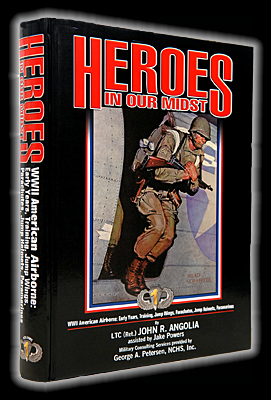
Heroes in Our Midst Volume 1
WWII American Airborne: Early Years, Training, Jump Wings, Parachutes,
Jump Helmets, Paramarines
When the intent to address the history of the WWII U.S. airborne forces
was first contemplated, the reaction was “What can one do that hasn’t already been done?” Upon hearing of
the project, historians, advanced researchers, collectors, and fans of the airborne stepped forward asking, “What can
I do to help?” What was initially intended to be a single volume has turned into a formidable series on the subject.
This first volume deals in great detail with the Early Years, Airborne Training, Parachute Qualification Wings and Trimmings,
Evolution of Military Parachutes, Jump Helmets, and Paramarines in 528 pages, 1660 photos (most in full color), large format
with deluxe binding.
Future volumes, each over 500 pages, will cover Troop Carriers, Glider Troops, Pathfinders, Service
and Jump Uniforms, Divisional/ Unit patches, Distinctive Insignia, Special Insignia, Equipment, Weapons, Tactical Operations,
Unit Colors (Flags and Guidons), and Paper-Related Collectibles. Hard Cover, Deluxe Binding, 11.25" x 8.75", 528
pages, 1,660 photos - Most in Color. Price - $94.95
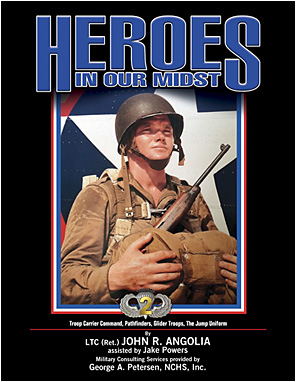
HEROES IN OUR MIDST, Vol. 2
Troop Carrier Command, Pathfinders, Glider Troops, The
Jump Uniform
This second volume of “Heroes in Our Midst”
continues the in-depth study of everything airborne-related. The Troop Carrier Command chapter outlines training and tactical
operations, the aircraft used, uniforms and insignia, plus 116 Troop Carrier squadron patches.
The Pathfinders are
covered in similar fashion showing their uniforms and insignia, and their specialized radar, lighting and signal equipment.
There is also a massive chapter on Glider Troops covers tactical glider development and operations, plus uniforms and insignia
worn by glider pilots and troops to include the evolution of garrison cap patches of all styles. All known makers of glider
qualification badges and their associated trimmings are detailed in full color.
The paratroopers’ Jump Uniform
is a stand-alone 160 page chapter showing numerous photos of the “balloon cloth” coverall, the M1941 and M1942
jump uniforms and their modifications, and an extensive 42 page study of jump boot evolution by manufacturer. The chapter
concludes with coverage of the M1943 field combat uniform with a special emphasis on modified M1943 jump trousers. Hard
Cover, Deluxe Binding, 11.25" x 8.75", Pages:512, 1,400 color and B+W photos. Price - $94.95
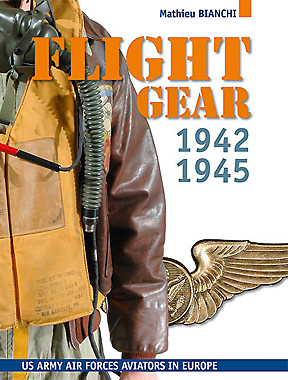
Flight Gear 1942-1945
This new book is designed as a guide to the flight clothing and equipment issued to American airmen in Europe, August
1942 (the first bombing mission over France) to May 1945.
Hundreds of period photographs and hundreds of detailed
pictures of surviving artifacts are included for the first time, introducing the reader to the evolution of this equipment,
from the early use of British items, to local modifications, up to the latest technical breakthroughs. In the final chapter,
25 full-color reconstructions illustrate the various guises of these airmen, who liberated Europe from the sky. Hard cover,
size 9" x 12", Pages: 176, 1,000 color and B+W photos. Price $54.95
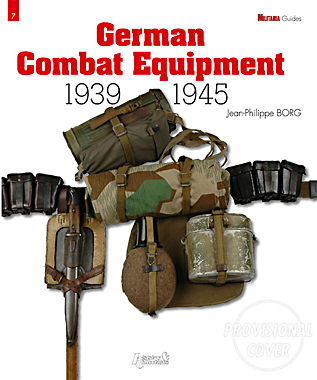
German Combat Equipment
1939 - 1945 The equipment of the German
Soldier, at the beginning of the Second War, was strongly inspired by the Veterans of the Great war, despite the adoption
of some new materials between the two wars, including the colorful canvas tent, particularly original for its time.
This guide describes in detail the main variations of each piece, from the bayonet canister to the tank, gas masks. the individual
tools, etc. This is a valuable tool for the collector, modeler and military historian. perfect bound, soft
cover, size 8" x 9.5", Pages: 64, over 100 B+W photos and color. Price ; $29.95
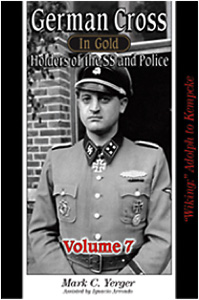
German Cross in Gold Volume 7
Holders of the SS and Police
“Wiking:” Adolph to Kempcke
The
first of two volumes, "Wiking" Part I includes the most detailed Combat Elements chapter of the series to date in both text
and photos. The divisional commanders are also covered in expanded text detail and unpublished images. The 78 German Cross
in Gold recipient biographies covered in Part I include the two longest of “Wiking,” Swords holders Hans Dorr
and August Dieckmann. Among the 33 Roll of Honor Clasp and Close Combat Clasp in Gold holders are further unpublished
images and details, including previously unconfirmed award holders. An addendum adds significantly to prior volumes with previously
unpublished award ceremony images of “Das Reich” and the complete surviving award documents for another German
Cross in Gold holder. A comprehensive study essential to anyone interested in armored units of the Waffen-SS.
Hard Cover, Deluxe Binding, 6" x 9", 432 Pages (100 pages more than previous volumes), 248 B+W wartime photos. Price -
$54.95
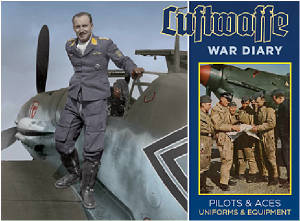
Luftwaffe War Diary:
Pilots & Aces: Uniforms &
Equipment
Visual history of the German Luftwaffe
fighter aces and their crew members in World War II.
Hundreds of color and b/w images of pilots and crews, aircraft, uniforms,
awards, sidearms, and more. Includes Stuka dive-bombers, Messerschmitt Bf 109 fighters, and other planes.
Must-have for
historians, modelers, World War II buffs, and aviation enthusiasts. Hardcover, size 11" x 8", Pages: 288, 400
color & b/w photos. Price - $39.95
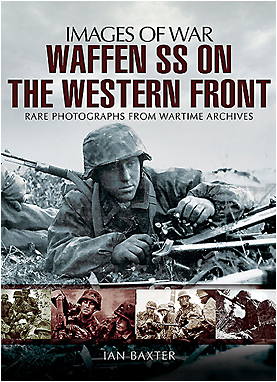
IMAGES OF WAR:
Waffen-SS on the Western Front
This book in the popular Images of War series covers the deeds of the Waffen-SS on the Western Front during the Second
World War. With extensive text and in-depth captions with many rare and unpublished photographs, it describes the fighting
tactics, the uniforms, the battles and the different elements that went into making the Waffen-SS such an elite fighting unit.
It traces how the Waffen-SS carefully built up their assault forces utilizing all available reserves and resources into a
ruthlessly effective killing machine. It depicts how this awesome military formation grew to be used in offensive and then
in defensive battles, and provides much historical information and facts about the weapons and all the components that fought
on Western Front. The reader learns how the Waffen-SS battled their way through the Low Countries and the Balkans. After D-Day
they played a key role in Normandy and fought at Arnhem, in the Ardennes and shifted from one disintegrating part of the front
to another in a drastic attempt to stabilize the crumbling war effort.
The Waffen-SS on the Western Front 1940 –
1945 provides an excellent insight into one of the most effective fighting formations in military history. soft cover,
size 7.5" x 9.5", Pages: 160, 250 B+W wartime photos. Price - $24.95 (rzm)
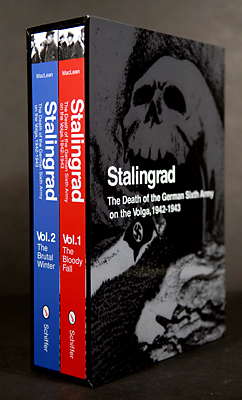
Stalingrad: The Death of the German Sixth Army on the Volga 1942-1943 Volume 1:
The Bloody Fall, Volume 2: The Brutal Winter
Stalingrad: The Death of the German Sixth Army on the Volga, 1942-1943, is the
first published work to detail the situation of every German corps and division for every day of the six-month Stalingrad
campaign.
Derived from the Sixth Army daily operation reports and the German Army High Command (OKH) situation maps
(Lage Ost), this two-volume set presents the situation on the flanks of the army, as well as the combat in the city itself,
a level of detail never before attempted.Stalingrad was the perfect storm that would lead to the death of an army –
the German Sixth Army.
Led by Field Marshal Friedrich Paulus, but micromanaged by Adolf Hitler, who insisted that
his forces fight to the last man and bullet, the Sixth Army became fixated on an objective that continued to be just past
their grasp. Believing that Stalingrad would be theirs “if only” one more attack against the urban rubble was
mounted, the Sixth Army did not see that it was in a situation where if something did go wrong, it would not “see”
impending doom until it was too late. That something was the massive Soviet attack that broke through both flanks of the Sixth
Army in such a violent manner and to such a great operational depth that any hope of relieving the surrounded pocket from
the outside in such horrible winter conditions was probably Illusionary. Thus, defeat was in order for the Sixth Army, but
it would not end there. Adolf Hitler had insisted that this would be a fight between the supermen of Aryan Germany against
the sub-humans of Slavic Russia.
In this fight, according to Nazi ideology, the sub-humans had no right to live.
Given the polar ideological differences of Fascism and Communism, combined with this racial antagonism, when the Red Army
did gain the upper hand and isolate the German forces around Stalingrad in November 1942, the situation guaranteed that the
Sixth Army would not only be defeated, but that it and most of its soldiers were headed for annihilation. Hard cover 2
volume box set, Size: 7″ x 10″, Pages: 320, Over 500 color and B+W photo. Price
- $69.99
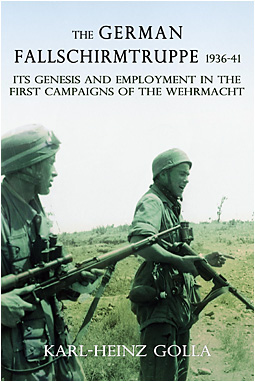
The German Fallschirmtruppe 1936-41
Its Genesis and Employment in
the First Campaigns of the
Wehrmacht The Fallschirmtruppe of the Wehrmacht won recognition for their valor and endurance
not only from their fellow German soldiers, but from their former enemies as well. On the basis of careful and comprehensive
research, including utilizing extensive unpublished documentary and personal materials, the author covers the history of the
Fallschirmtruppe from its genesis and early training to its employment in combat in Scandinavia, the Albert Canal in Belgium,
Holland, the Greek mainland and, of course, at Crete.
The reasons for the remarkable successes of the German Fallschirmtruppe
during this period are analyzed, as are also the conceptual weaknesses inherent in its formation, and the faults in the command
and control during its combat employment.
The author, himself a former Bundeswehr Fallschirmjäger and General Staff
officer, has also utilized accounts from those who fought the Fallschirmtruppe, and has thus been able to correct many errors
perpetuated in previous books on this subject, besides providing more complete coverage.
About the author:
Karl-Heinz Golla, born in 1939, joined the Fallschirmjäger of the Bundeswehr in 1958. After completion of officer training,
he served as a platoon leader and company commander and then passed the General Staff course. He undertook several assignments
as a General Staff officer in the fields of operations, war planning and doctrine in senior national and NATO commands. In
between he was also a commander of an armored infantry battalion. He retired in 1994 with the rank of colonel. Since then
he has authored several military history books, including "Zwischen Reggio und Cassino: Das Kriegsgeschehen in Italien im
zweiten Halbjahr 1943" (2004) and "Der Fall Griechenlands 1941" (2007). Size: 6"x9", Pages: 640, Approximately 100 B+W
photos and 12 color photos . Price - $79.95
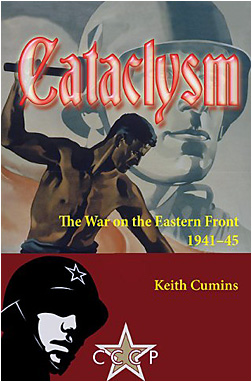
Cataclysm
The War on the Eastern Front 1941-45 It has been more than 60 years since the end of the Second World War, a conflict
that shaped the second half of the Twentieth Century. The significance of the war, and its relevance to the lives of so many,
has generated a legacy of published material on the topic sufficient to fill a library. Yet disproportionately few publications
deal exclusively with the true cauldron of the conflict - the brutal and uncompromising war between Germany and the Soviet
Union; and fewer still attempt to provide, in a single volume, a comprehensive overview of that war from the commencement
of Operation Barbarossa to the last battle in the rubble-strewn streets of Berlin. Drawing on information from Soviet archives
that have only become available since the collapse of the Soviet Union, 'Cataclysm: The War on the Eastern Front 1941-1945',
is unquestionably the most successful attempt so far to achieve that goal. As Winston Churchill acknowledged, the Red Army
tore the guts out of the Wehrmacht, and the story of how that happened, a story in which the events at Stalingrad were just
one part, deserves to be told with greater frequency and to be understood more widely. From the enormous amount of detailed
information currently available on the military struggle on the Eastern Front, condensing the events of a war of such scale
and duration into a succinct narrative in a meaningful and balanced way has long been a challenging task. Yet the mortal conflict
between Hitler's Germany and Stalin's Russia is deserving of the effort. 'Cataclysm' focuses on the ground fighting along
the Eastern Front, for it was overwhelmingly the ground war that determined the outcome of the conflict. With the aid of concise
supporting maps, the book provides a clear and comprehensive account of the ebb and flow of a four-year long conflict conducted
across a thousand miles of frontline in the vast region between the Elbe and Volga. Describing the conflict in a predominantly
chronological manner, the book's narrative nonetheless maintains an easy, flowing style, relating with clarity the sequence
of events as the interwoven campaigns on different sectors of the long frontline unfolded. For anyone wishing to understand
the war in on the Eastern Front, 'Cataclysm' is essential reading, and the book will prove to be an invaluable addition to
any bookshelf. Size: 6"x9", Pages: 400, 40 photographs, 40 color .Price -$59.95 (rzm)
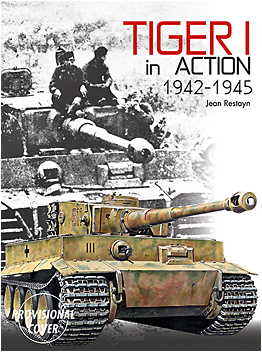
TIGER I in Action
1942 - 1945 In April 1941, two months prior to
operation 'Barbarossa,' Adolf Hitler ordered the development of a heavy tank, armed with the famed 88 mm gun. This tank became
a legend in its own time. Feared by its adversaries and liked by its crews, the Tiger etched its mark in history and the legend
carries on, 60 years after the end of the war.
This compilation of the two volumes dealing with Tiger units on the Eastern
front, the Western front, and Africa, features almost a thousand period pictures, mostly unpublished, and more than 80 full-color
plates by the author: tank profiles, details of markings and insignia, camouflage, and a short history of each Tiger unit.
This edition has been revised and augmented, with more accurate captions as to dates and locale, together with new illustrations
and a chapter on additional units. Size: 9"x12", Pages: 288, Over 1,000 B&W wartime photos. Price - $52.95
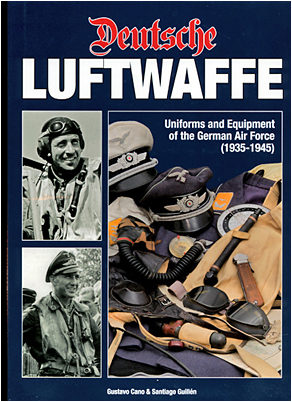
DEUTSCHE LUFTWAFFE:
Uniforms and Equipment of the German Airforce 1935-44 When
World War II began, Germany’s Luftwaffe was the most powerful air force yet seen, achieving victory after victory in
tandem with the German Army. But as other great powers rose to combat Hitler, the supremacy of the Me-109, Stuka, and Focke-Wulf
soon began to pale before vast fleets of Allied warplanes which German industry could hardly match.
Nevertheless,
while “flying till they died,” Luftwaffe pilots continued to write a record of heroism and innovation, until at
the very end of the war they nearly gained the edge again with their aces flying the world’s first jet fighter, the
Me-262.
In this large, lavishly illustrated, full-color work we gain an intimacy with the daily life of Luftwaffe pilots
as never seen before. From their uniforms to equipment to everyday sundries, drawn from incredible collections of memorabilia,
we can share their experiences on airfields or in the very skies of Europe, above the dark cause which unfortunately they
served. Size: 11.9"x8.4", Pages:310, Over 1,000 color and B+W photos. Price - $75.00
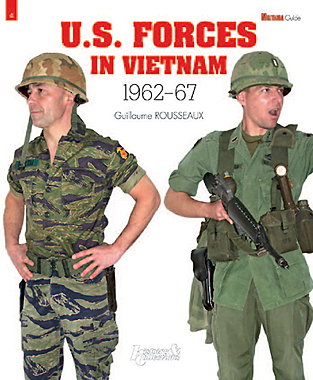
U.S. Forces in Vietnam
1962-1967 This publication covers the chronological
evolution of uniforms, equipment and weaponry issued to the American soldier during the first years of the conflict, from
1962 to 1967 (a second volume will cover the 1968 to 1975 period). All of the uniforms and equipment shown are period, however
some of the weapons are replicas. In the aim of depicting characteristic servicemen at given periods, a great deal of research
was undertaken in order to guarantee coherence between the units, dates and geographical situations. Differing from
other publications, the author has deliberately chosen to illustrate all types of service personnel rather than solely combatants
in order to give an exact presentation of the American military during this period. Indeed, it should be remembered that 85%
of service personnel in Vietnam were support troops and advisors. Size: 8"x9.5", Pages: 68, Over 100 color photos. Price -
$22.95
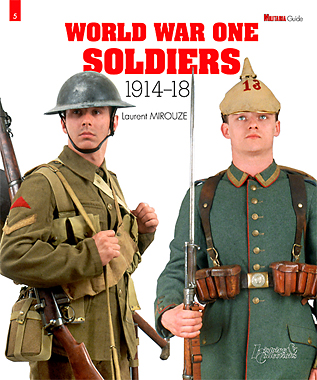
World War One Soldiers
1914-18 Never before have actual battle uniforms,
individual equipment and weapons of the infantrymen of the great war been illustrated in such authentic detail. Original surviving
items, painstakingly assembled from rare private and public collections, are illustrated in full color on live models, just
as they were worn in the battlefield. Each of these 31 soldiers: British, Belgian, French, German, Russian, Austrian, Italian,
America, is photographed from both front and back, with key diagrams, and accompanied by a detailed commentary. Size: 8"x9.5",
Pages:84, 100 color photos. Price $26.95 (rzm)
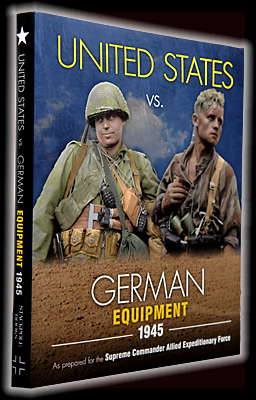
United States vs. German Equipment 1945
Prepared for the Supreme Commander, Allied Expeditionary Force Detailed
overview of American and German equipment from World War II
Color photos of vehicles, guns, knives, grenades, uniforms,
headgearpersonal items, awards, radios, and much more
Period photos of generals, vehicles, and soldiers in action
Perfect for historians, collectors, and reenactors. Size: 10"x8", Pages: 320, Color & BW photos. Price - $49.95
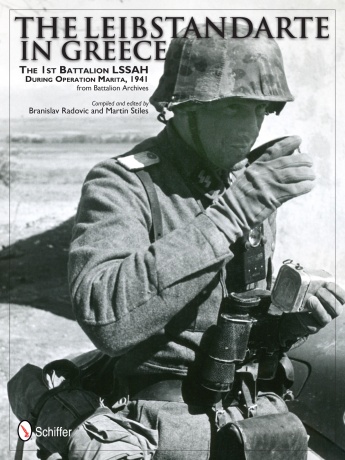
The Leibstandarte in Greece: The 1st Battalion LSSAH during Operation Marita, 1941 from Battalion Archives This
large-format book contains over 300 previously unpublished photographs in superb high-quality reproduction. Originally photographed
in May 1941 by an SS-Kriegsberichter, the book depicts the 1st Battalion, Leibstandarte SS “Adolf Hitler” (LSSAH)
during their victorious march through Greece in 1941. Among the many images are notable Waffen-SS personalities – including
Peiper, Pleiss, Witt, Wünsche, Meyer, Wittmann, Himmler, and Dietrich – as well as clear, professional images of uniforms,
vehicles and equipment, all fully captioned. Also included is a brief summary and map of the campaign, rank insignia illustrations,
glossary of terms, plus several “then and now” images of the battalion crossing the Gulf of Patras in pursuit
of retreating Allied forces. Size: 9″ x 12″ | 345 illustrations | 240 pages.
Price - $69.99
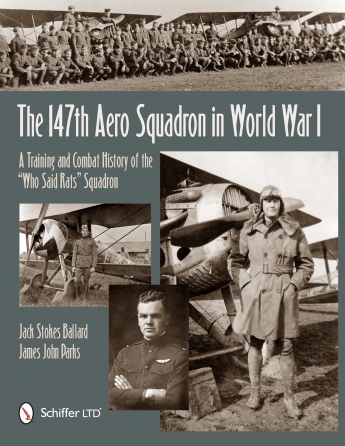
The 147th Aero Squadron in World War I: A Training and Combat History of the “Who Said Rats” Squadron This
book is the first complete history of the American Air Service's 147th Aero Squadron in World War I and provides, at last,
an understanding of the role of this least known unit of the 1st Pursuit Group. This detailed account tells how various individuals
responded as volunteers, describes the trials of training in Texas and Canada, explains the often ignored problems of transporting
across the Atlantic and English Channel, and then reveals the thrilling, frustrating, and heroic combat actions of the 147th
over the Western Front up to the Armistice. Size: 8.5" x 11" | 128 illustrations |
240 pages, Cost - $59.99
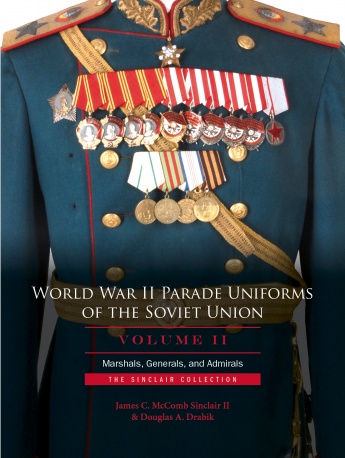
World War II Parade Uniforms of the Soviet Union • Vol.2: Marshals, Generals, and Admirals: The Sinclair Collection The
second volume of the Sinclair Collection brings into focus a new group of World War II Soviet uniforms. All uniforms are presented
in full color – including one of Stalin’s – and includes very rare examples of branch marshals and other
flag ranks. A new archive of period photographs makes this a "must have" for the World War II Soviet collector and historian.
Along with the first volume, this is the most comprehensive compendium available of World War II parade uniforms of the Soviet
Union. Size: 9" x 12" | 225 illustrations | 160 pages, Cost - $69.99
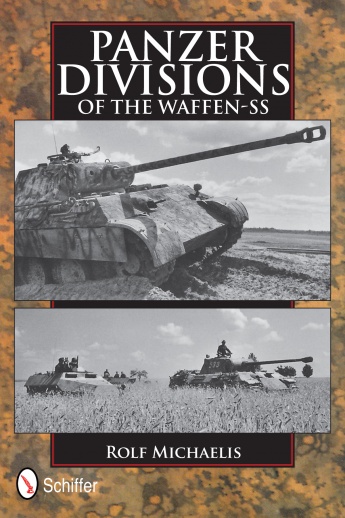
Panzer Divisions of the Waffen-SS A detailed history of all seven Waffen-SS panzer divisions
in World War II: 1.SS-Panzer-Division "Lebstandarte Adolf Hitler"; 2.SS-Panzer-Division "Das Reich"; 3.SS-Panzer-Division
"Totenkopf"; 5.SS-Panzer-Division "Wiking"; 9.SS-Panzer-Division "Hohenstaufen"; 10.SS-Panzer-Division "Frundsberg"; 12.SS-Panzer-Division
"Hitlerjugend." Each unit is presented in detailed history from its formation, combat operations throughout the war, and final
disposition at war's end. Rare images – most never before published, including soldbuchs and award documents –
and personal veteran accounts are featured along with equipment, commanders, maps, and charts. Size:
6" x 9" | 113 illustrations | 320 pages, Cost - $45.00
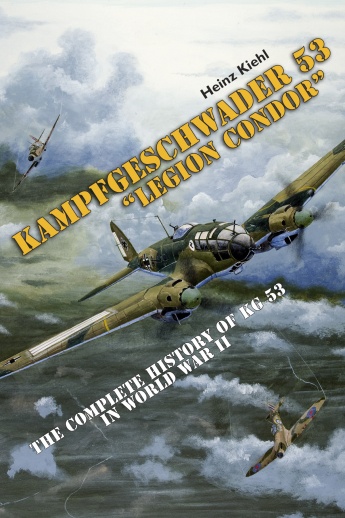
Kampfgeschwader 53 "Legion Condor": The Complete History of KG 53 in World War II Flying
Do 17, He 111, and Ju 88 aircraft, Luftwaffe bomber unit Kampfgeschwader 53 "Legion Condor" saw action in the campaigns in
Poland and France, the Battle of Britain, Russia, and finally over the invasion front. Towards the end of World War II, the
He 111 aircraft of KG 53 served as flying launch platforms for the infamous V-1 in dangerous missions against England. The
author – a former member of the Geschwader – accurately documents the unit’s formation, development, and
combat operations and brings it to life through gripping personal accounts and historically valuable photographs. This book
is one of the few books in English on the wartime operations of a German bomber unit and an indispensable addition to Luftwaffe
history. Size: 6" x 9" | 130 illustrations | 384 pages, Cost - $39.99
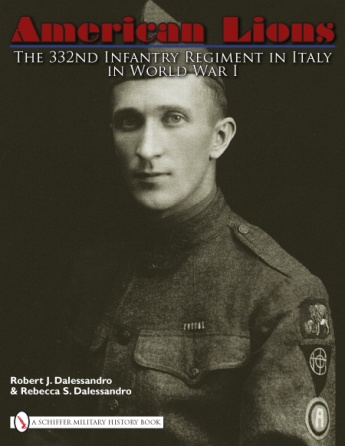
American Lions: The 332nd Infantry Regiment in Italy in World War I Told
here is the riveting story of the 332nd U.S. Infantry Regiment in the Army in World War I. As Pershing’s “Propaganda
Regiment” they were the only American regiment assigned to Italy, where they formed a phantom army that helped defeat
the Austro-Hungarian Empire. The 332nd fought in the Vittorio-Veneto Campaign and following the armistice, served in the occupation
of Austria, Dalmatia, and Montenegro. Includes the uniforms, insignia, and ephemera, of the 332nd; lavishly illustrated with
over 300 rare and previously unpublished color and sepia photographs, which are drawn from public and private collections.
This detailed work illuminates the compelling story of the courageous “Lions of St. Mark.” Size:
8 1/2" x 11" | 240 pages, Cost - $69.99
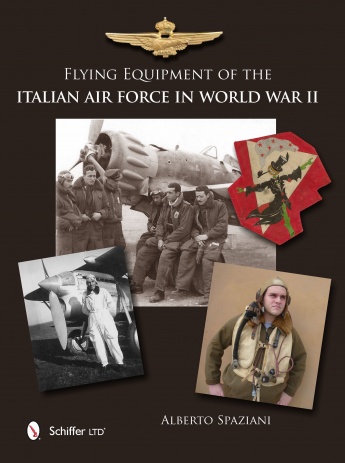
Flying Equipment of the Italian Air Force in World War II: Flight Suits • Flight Helmets • Goggles •
Parachutes • Life Vests • Oxygen Masks • Boots • Gloves This book is
a highly detailed look at World War II era Italian flight gear. Much of the information appears here for the first time in
English. Covering flight suits, flight helmets, goggles, parachutes, life vests, oxygen masks, boots, gloves, and more, in
over 600 images, offering full coverage of this long overlooked topic. Color photography shows full views of actual period
clothing and equipment, as well as close-up details of manufacturers' marks and labels, zippers, buttons and snaps, and insignia.
War era images, including rare period color, show Italian aircrews wearing a variety of Italian and German flight gear. Size:
9" x 12" | 700 illustrations | 240 pages, Cost - $69.99
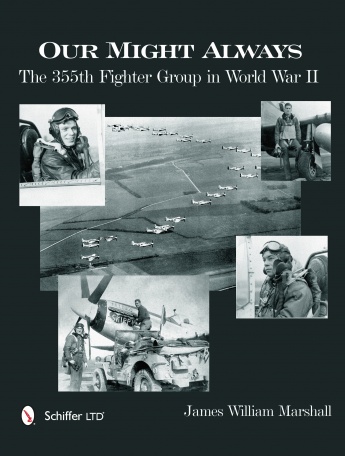
Our Might Always: The 355th Fighter Group in World War II Our Might Always: The 355th Fighter
Group in World War II is an exhaustive history in day-by-day combat diary format with over 800 rare images of the 355th including
fifty color profiles of P-47s and P-51s. The 355th was third in combined German aircraft destroyed during World War II, first
in ground credits, and fifth in air-to-air victory credits within the 8th Air Force. The book is extensively researched with
respect to Luftwaffe units engaged, the data tables are extremely detailed and extensive for aircraft, pilots, victory credits,
pilot rosters, losses, aces scores and unit awards. Size: 8 1/2" x 11" | 887 illustrations
| 560 pages, Cost - $79.99
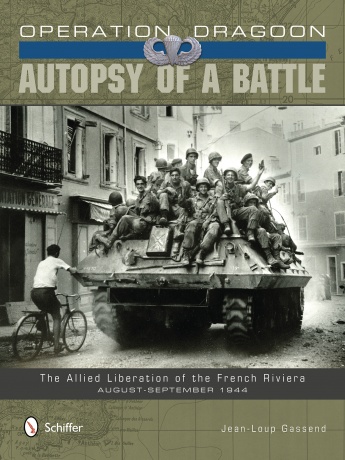
Operation Dragoon: Autopsy of a Battle: The Allied Liberation of the French Riviera • August-September 1944 On
the night of August 14-15, 1944, the First Airborne Task Force, which included the U.S. 509th, 517th and 551st Parachute Infantry
Regiments, jumped into enemy held territory spearheading Operation Dragoon, the Allied invasion of southern France. Based
on interviews from all combatant units, battlefield archaeology, period photos, letters and reports, this book provides an
outstandingly detailed hour-by-hour account of the advance through southern France, as seen through the eyes of those who
lived through it, bringing to light the tragic and gruesome realities of what was later to become known as the "Champagne
Campaign." Size: 9" x 12" | 874 illustrations | 432 pages, Coast - $89.99
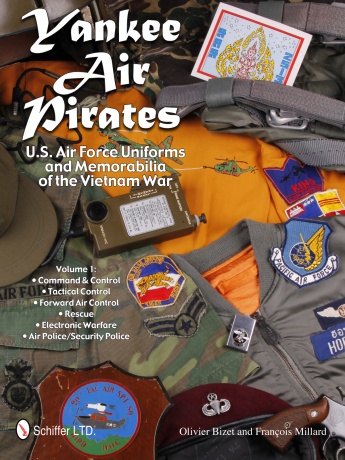
Yankee Air Pirates: U.S. Air Force Uniforms and Memorabilia of the Vietnam War: Vol.1: Command & Control •
Tactical Control • Forward Air Control • Rescue • Electronic Warfare • Air Police/Security Police Yankee
Air Pirates is a highly detailed look at United States Air Force uniforms and equipment as used during the Vietnam War. This
comprehensive book – the first of a multi-volume set – presents hundreds of Air Force named items in over 900
full color photos, giving the reader a precise insight and reference covering fifty-eight Air Force units. Flight suits, utility
shirts, jungle jackets, headgear, insignia, weapons, plaques, souvenir lighters, and many theater-made items are featured
to illustrate the history of both flying and ground units. Topics covered in this initial volume are: Command & Control,
Tactical Control, Forward Air Control, Rescue, Electronic Warfare, and Air Police/Security Police units. An extensive chapter
offers a detailed review of uniforms, headgear, and footwear, referenced by model and date. Size: 9"
x 12" | 900 illustrations | 328 [pages, Cost - $89.99
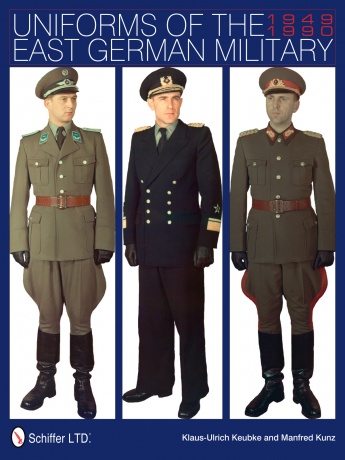
Uniforms of the East German Military: 1949-1990 This book is the most complete study in
English on East German (DDR) military and police service, parade and combat uniforms. With over 1,000 images – hundreds
in full color – the uniforms, headgear, and insignia of all military service branches as well as police and border
forces are covered in superb detail. Also presented are official regulations, dress codes, women's uniforms, accessories,
and a wide selection of period images covering the entire DDR period from 1949-1990. Size: 9" x 12"
| 1 illustrations | 240 pages, Cost - $69.99
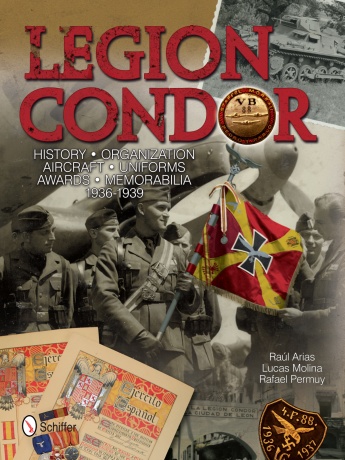
Legion Condor: History • Organization • Aircraft • Uniforms • Awards • Memorabilia •
1936-1939 This new, large format book contains over 1,000 images of Germany's Legion Condor
during the Spanish Civil War from 1936-1939. Coverage of all branches of the Legion Condor, with a special emphasis on aviation,
includes detailed operational and unit histories, technical aspects of aircraft flown, biographies of noted personalities,
and a look at uniforms, insignia and equipment. Superbly rendered full-color aircraft profiles show the variety of fighter,
bomber, recon, and transport aircraft used. Covered too are the panzer, flak and naval units of the Legion Condor. A collection
of hundreds of extremely rare Legion Condor artifacts – in full-color – rounds out this comprehensive look at
the infamous pre-World War II German military. Size: 9" x 12" | 1000 illustrations
| 296 pages, Cost - $79.95
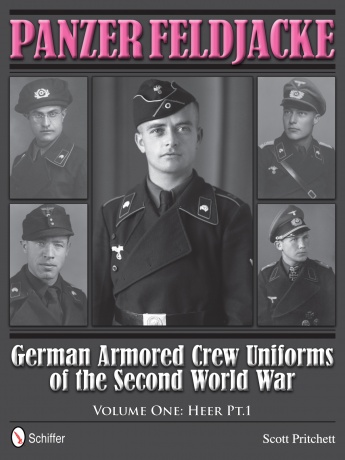
Panzer Feldjacke: German Armored Crew Uniforms of the Second World War • Vol.1: Heer Pt.1. Few
items of Third Reich militaria collecting hold as much fascination as the uniforms of the German armored forces. Germany revolutionized
armored warfare and in the process developed some of the most striking uniforms ever worn. This four volume set by Scott Pritchett
leverages research from vast amounts of information and sources as well as the superb books written in the last several decades
by the most notable collector/historians to cover the topic. The uniforms and insignia of all branches of the Wehrmacht and
Waffen-SS who wore them are detailed in over 5,600 illustrations made available through unprecedented access to the best Panzer
collections worldwide. The four volumes cover: Vol.1: Heer Pt.1 Vol.2: Heer Pt.2 Vol.3: SS-VT and Waffen-SS Vol.4: Luftwaffe Size:
9" x 12" | 2000 illustrations | 320 pages, Cost - $125.00
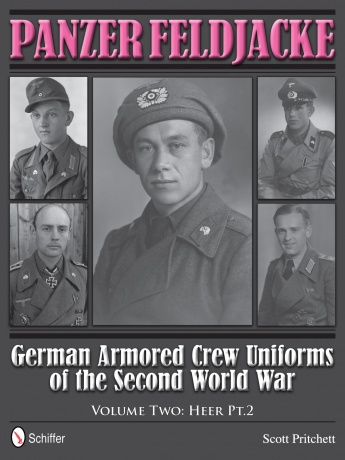
Panzer Feldjacke: German Armored Crew Uniforms of the Second World War • Vol.2: Heer Pt.2. Few
items of Third Reich militaria collecting hold as much fascination as the uniforms of the German armored forces. Germany revolutionized
armored warfare and in the process developed some of the most striking uniforms ever worn. This four volume set by Scott Pritchett
leverages research from vast amounts of information and sources as well as the superb books written in the last several decades
by the most notable collector/historians to cover the topic. The uniforms and insignia of all branches of the Wehrmacht and
Waffen-SS who wore them are detailed in over 5,600 illustrations made available through unprecedented access to the best Panzer
collections worldwide. The four volumes cover: Vol.1: Heer Pt.1 Vol.2: Heer Pt.2 Vol.3: SS-VT and Waffen-SS Vol.4: Luftwaffe Size:
9" x 12" | 2000 illustrations | 320 pages, Cost - $125.00
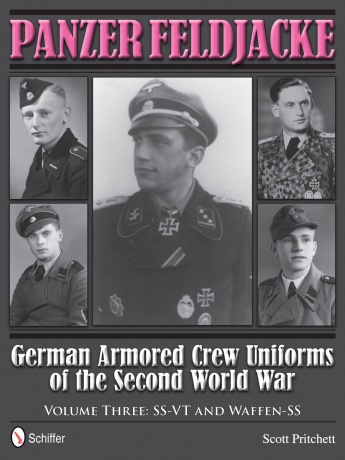
Panzer Feldjacke: German Armored Crew Uniforms of the Second World War • Vol.3: SS-VT and Waffen-SS Few
items of Third Reich militaria collecting hold as much fascination as the uniforms of the German armored forces. Germany revolutionized
armored warfare and in the process developed some of the most striking uniforms ever worn. This four volume set by Scott Pritchett
leverages research from vast amounts of information and sources as well as the superb books written in the last several decades
by the most notable collector/historians to cover the topic. The uniforms and insignia of all branches of the Wehrmacht and
Waffen-SS who wore them are detailed in over 5,600 illustrations made available through unprecedented access to the best Panzer
collections worldwide. The four volumes cover: Vol.1: Heer Pt.1; Vol.2: Heer Pt.2; Vol.3: SS-VT and Waffen-SS; Vol.4: Luftwaffe Size:
9" x 12" | 830 illustrations | 272 pages, Cost - $79.95
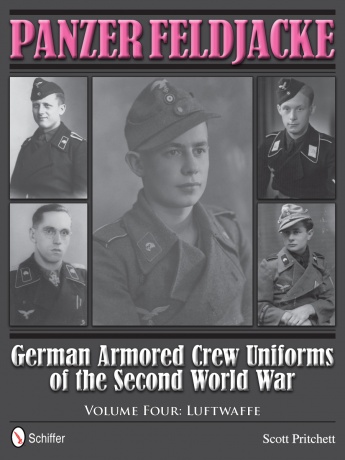
Panzer Feldjacke: German Armored Crew Uniforms of the Second World War • Vol.4: Luftwaffe Few
items of Third Reich militaria collecting hold as much fascination as the uniforms of the German armored forces. Germany revolutionized
armored warfare and in the process developed some of the most striking uniforms ever worn. This four volume set by Scott Pritchett
leverages research from vast amounts of information and sources as well as the superb books written in the last several decades
by the most notable collector/historians to cover the topic. The uniforms and insignia of all branches of the Wehrmacht and
Waffen-SS who wore them are detailed in over 5,600 illustrations made available through unprecedented access to the best Panzer
collections worldwide. The four volumes cover: Vol.1: Heer Pt.1; Vol.2: Heer Pt.2; Vol.3: SS-VT and Waffen-SS; Vol.4: Luftwaffe Size:
9" x 12" | 530 illustrations | 224 pages, Cost - $79.95
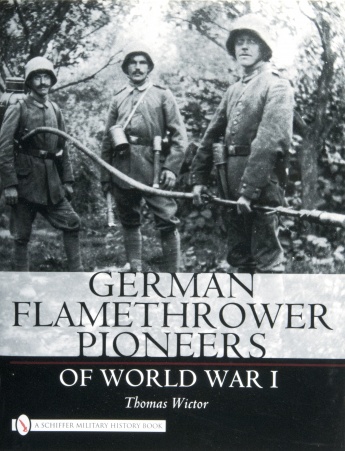
German Flamethrower Pioneers of World War I German Flamethrower Pioneers of World War I
is the definitive reference on the topic. Lavishly illustrated, its main sources are the history of the flamethrower regiment,
written by its former commander; a manual of assault-troop and flamethrower tactics, by a former flamethrower officer; and
the death book published by veterans of the flamethrower regiment. Prewar, wartime, and postwar developments are covered,
along with detailed descriptions of weapons, tactics, and epic flame battles. New information, such as the combat use of an
aircraft-mounted flamethrower, is included. Includes over 300 photographs and illustrations, most previously unpublished. Size:
8 1/2" X 11", Cost - $69.95
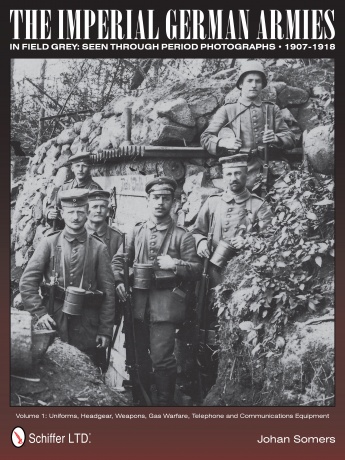
The Imperial German Armies in Field Grey Seen Through Period Photographs • 1907-1918: Volume 1: Uniforms, Headgear,
Weapons, Gas Warfare, Telephone and Communications Equipment These books present in detail the
field-grey uniforms, helmets, weapons, and equipment used before and during the First World War. The origin and the many formations
in existence at the outbreak of the war, and newly raised will be outlined, followed by a section on uniforms. The many carefully
selected black and white war-era photos with large and complete captions will give the reader a thorough understanding of
the appearance of the German Army during World War I. Each branch of service is lavishly illustrated with over 3000 black
and white, and color photographs. The three volumes cover: uniforms, headgear, weapons, gas warfare, telephone and communications
equipment, infantry, jäger, schützen, radfahrer, mountain troops, machine gunners, cavalry, artillery, pioneers, transport,
train, medical, and miscellaneous formations. Size: 9" x 12" | 1000 illustrations
| 280 pages, Cost - $79.95
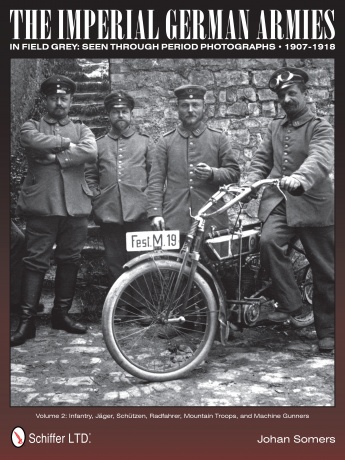
The Imperial German Armies in Field Grey Seen Through Period Photographs • 1907-1918: Volume 2: Infantry, Jager,
Schutzen, Radfahrer, Mountain Troops, and Machine Gunners These books present in detail the
field-grey uniforms, helmets, weapons, and equipment used before and during the First World War. The origin and the many formations
in existence at the outbreak of the war, and newly raised will be outlined, followed by a section on uniforms. The many carefully
selected black and white war-era photos with large and complete captions will give the reader a thorough understanding of
the appearance of the German Army during World War I. Each branch of service is lavishly illustrated with over 3000 black
and white, and color photographs. The three volumes cover: uniforms, headgear, weapons, gas warfare, telephone and communications
equipment, infantry, jäger, schützen, radfahrer, mountain troops, machine gunners, cavalry, artillery, pioneers, transport,
train, medical, and miscellaneous formations. Size: 9" x 12" | 1000 illustrations
| 336 pages, Cost - $79.95
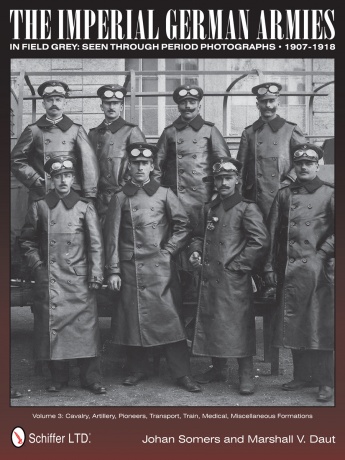
The Imperial German Armies in Field Grey Seen Through Period Photographs • 1907-1918: Volume 3: Cavalry, Artillery,
Pioneers, Transport, Train, Medical, Miscellaneous Formations These books present in detail
the field-grey uniforms, helmets, weapons, and equipment used before and during the First World War. The origin and the many
formations in existence at the outbreak of the war, and newly raised will be outlined, followed by a section on uniforms.
The many carefully selected black and white war-era photos with large and complete captions will give the reader a thorough
understanding of the appearance of the German Army during World War I. Each branch of service is lavishly illustrated with
over 3000 black and white, and color photographs. The three volumes cover: uniforms, headgear, weapons, gas warfare, telephone
and communications equipment, infantry, jäger, schützen, radfahrer, mountain troops, machine gunners, cavalry, artillery,
pioneers, transport, train, medical, and miscellaneous formations. Size: 9" x 12" | 1000 illustrations
| 360 pages, Cost - $79.95
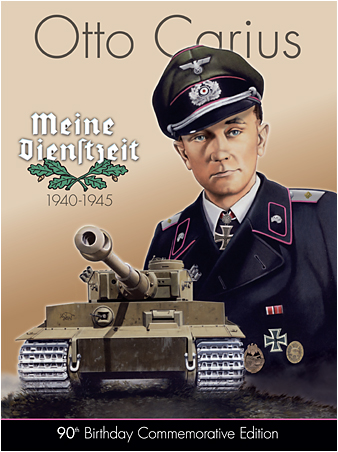
OTTO CARIUS
Meine Dienstzeit 1940-45
90th Birthday Commemorative Edition
Otto Carius was one of the most successful Panzer commanders ever to take a Tiger
tank into battle, destroying some 150 tanks and being decorated with the Oakleaves to the Knights Cross.
"Meine Dienstzeit"
meaning (My Military Service) 1940-45 is a look at Otto Carius' life during World War. Photos and stories chronicle his entrance
into the Wehrmacht (German Armed Forces) in 1940 as a volunteer, his life as a soldier, and his victories as a Panzer commander
for three and a half years on the Eastern Front. Detailed photos and illustrations of his numerous medals, decorations and
documents as well as an interview with Otto Carius about his time in the military. The book also contains excerpts from his
book “Tiger im Schlamm” (Tiger in The Mud) (first edition printed in 1960).
In October 1944, Oberleutnant
Carius became the youngest Reserve Officer in the Wehrmacht to receive the Oak Leaves (issue Nr.535). A total of 882 Oak leaves
were awarded by the 9. May 1945. Size: hardcover 9"x12", 158 Pages, 300 b&w plus color photos. Price - $65.00
|